Setiap produsen Eropa pasti pernah membuka penawaran harga dari Tiongkok dan bertanya-tanya bagaimana angka-angka tersebut bisa masuk akal. Jawaban singkatnya adalah kesenjangan tersebut nyata, struktural, dan terukur, tetapi juga lebih sempit daripada yang ditunjukkan oleh harga utama setelah memperhitungkan biaya pengiriman, bea masuk, dan waktu tunggu.
Perbandingan ini menyandingkan data resmi tenaga kerja dan energi dengan tarif bengkel yang sebenarnya dilaporkan oleh para pembuat mesin di forum permesinan, kemudian menunjukkan bagaimana kepemilikan mesin pemotong mengubah perhitungan tersebut.
Apa yang Mendorong Kesenjangan Biaya?
5 faktor masukan menentukan berapa biaya per jam pengerjaan lembaran logam di suatu negara, dan masing-masing faktor tersebut mengarah ke arah yang sama.
• Tenaga kerja: upah ditambah kontribusi sosial, pos pengeluaran terbesar di sebagian besar toko di negara-negara Barat.
• Energi: listrik untuk laser, kompresor, dan pendingin, ditambah gas bantu.
• Amortisasi mesin: harga pembelian dibagi selama jam kerja produktif, dan akan terpukul keras oleh tingkat pemanfaatan yang rendah.
• bahanChina memproduksi sebagian besar baja dan aluminium di dunia, sehingga toko-toko di sana membeli dengan harga langsung dari pabrik.
• Biaya operasional dan kepatuhan: sewa, asuransi, sertifikasi, dan administrasi.
Perbandingan Biaya Per Jam: Spanyol, Prancis, dan Cina
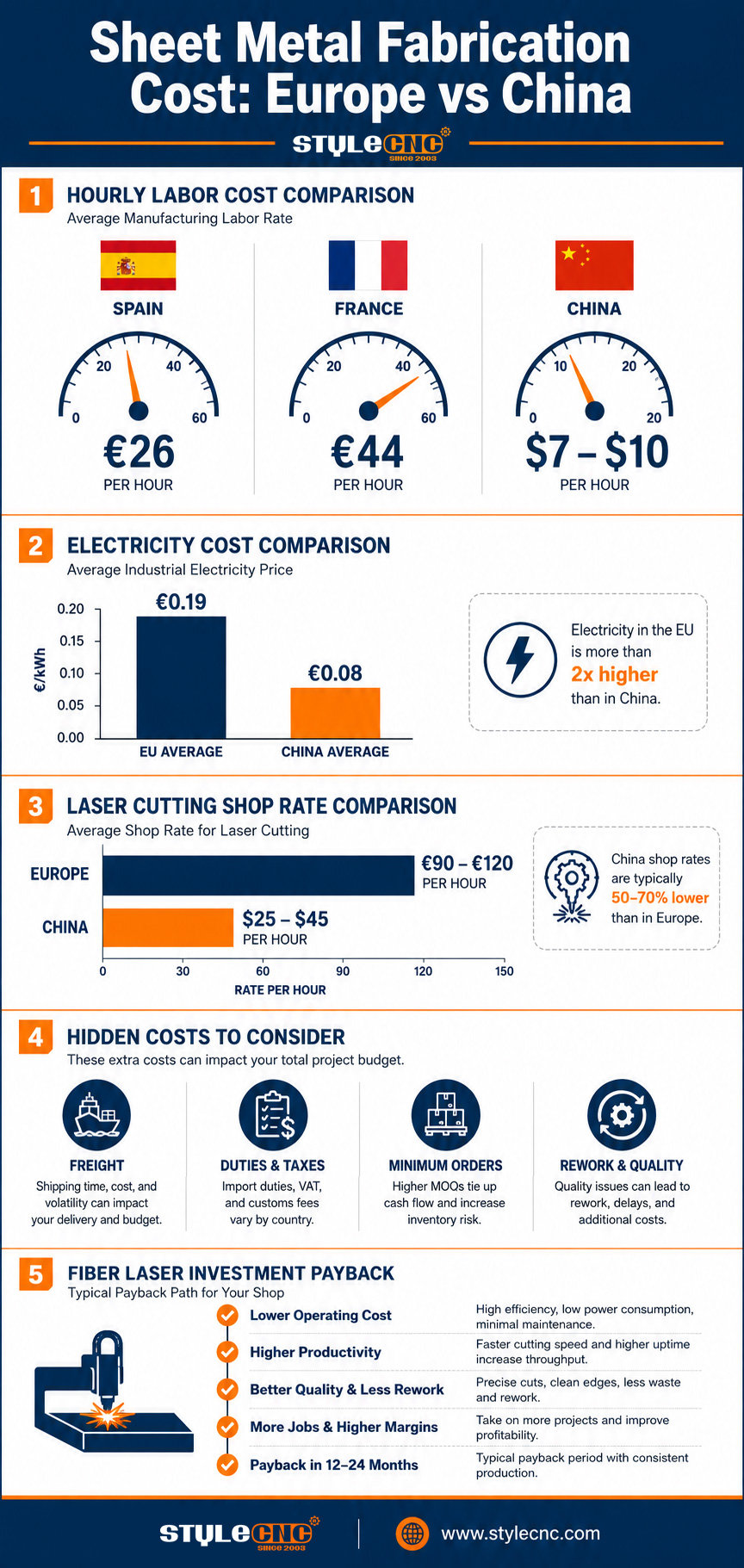
Data dasar biaya tenaga kerja berasal dari statistik resmi. Estimasi biaya tenaga kerja per jam terbaru dari Eurostat menempatkan rata-rata Uni Eropa di angka €34.9, dengan Prancis mendekati €44 dan Spanyol mendekati €26. Biaya tenaga kerja manufaktur di Tiongkok berada di kisaran... $7 untuk $10 per jam dengan beban penuh, berdasarkan data upah dari Biro Statistik Nasional.
| Faktor Biaya | Spanyol | Prancis | Tiongkok |
|---|---|---|---|
| Pengukuran (biaya tenaga kerja per jam, data resmi) | ≈ €26 (~$28) | ≈ €44 (~$48) | ≈ $7 untuk $10 dimuat |
| Listrik industri per kWh (kira-kira kisaran tengah) | ≈ $0.13 hingga $0.15 | ≈ $0.15 hingga $0.17 | ≈ $0.08 hingga $0.10 |
| Jam penggunaan mesin laser serat optik (daya, gas, bahan habis pakai, tanpa biaya tenaga kerja) | $ 10 ke $20 | $ 12 ke $24 | $ 6 ke $14 |
| Tarif pemotongan laser per jam yang umum dikutip | $ 90 ke $160 | $ 110 ke $200 | $ 25 ke $50 |
| Tarif bengkel fabrikasi per jam (termasuk biaya pengerjaan) | $ 50 ke $85 | $ 70 ke $110 | $ 15 ke $35 |
| Waktu tunggu untuk pembeli di Eropa Barat | Minggu yang sama | Minggu yang sama | 4 hingga 8 minggu melalui laut |
Angka tarif bengkel dan jam mesin adalah perkiraan kisaran pasar yang diambil dari laporan forum fabrikator dan panduan harga terkini, bukan dari tarif tunggal yang dipublikasikan. Angka-angka utama di baliknya:
• Prancis menanggung beban non-upah tertinggi di Uni Eropa, yaitu 32.3 persen dari total biaya tenaga kerja, dibandingkan dengan rata-rata zona euro yang kurang dari 26 persen.
• Perusahaan-perusahaan di Uni Eropa membayar sekitar €0.19 per kWh secara rata-rata dalam statistik harga listrik Eurostat terbaru, meskipun harga industri Prancis turun tajam dalam data setengah tahun terakhir.
• Analisis harga listrik terbaru dari IEA menemukan bahwa industri intensif energi Uni Eropa masih membayar lebih dari 50 persen di atas tingkat harga di Tiongkok.
• Teknisi mesin terampil dari wilayah Barat mendapatkan penghasilan $35 untuk $50 per jam sebelum biaya overhead, yang mendorong tarif bengkel yang sudah terisi menjadi $80 atau lebih, sementara toko-toko Tiongkok sejenis menawarkan harga tertentu. $20 untuk $35.
Di mana Eropa Membayar Lebih Banyak
Biaya tenaga kerja dan sosial
Pabrikasi Prancis membayar hampir sepertiga dari setiap euro upah tenaga kerja sebagai iuran sosial sebelum selembar pun lembaran logam dipotong. Spanyol berada jauh di bawah Prancis, itulah sebabnya bengkel-bengkel Spanyol seringkali menawarkan harga lebih rendah daripada bengkel-bengkel Prancis untuk pekerjaan yang sama, namun keduanya tetap jauh lebih murah daripada harga di Tiongkok.
Energi
Listrik merupakan celah struktural kedua. Laser serat optik 6 kW dengan pendingin dan kompresornya membutuhkan daya yang signifikan sepanjang shift kerja, dan gas bantu nitrogen dapat menambah daya. $10 untuk $15 per jam pemotongan untuk pekerjaan stainless steel. Harga di Eropa telah mereda dari puncaknya, tetapi selisih harga IEA dengan China belum tertutup.
Pemanfaatan
Pabrik manufaktur di Tiongkok umumnya beroperasi dalam 2 atau 3 shift, sehingga amortisasi mesin tersebar di lebih banyak jam kerja. Mesin Eropa yang beroperasi dalam satu shift hanya menanggung pinjaman yang sama pada sepertiga dari outputnya. Inilah satu-satunya celah yang benar-benar dapat dikendalikan oleh pembeli.
Biaya Tersembunyi dalam Penawaran Harga dari Tiongkok
Harga per bagian hanyalah angka awal. Biaya pengiriman laut, asuransi, bea impor, dan deposit PPN akan ditambahkan ke harga tersebut, dan jumlah pesanan minimum akan mendorong uang tunai masuk ke persediaan yang tersimpan di rak selama berminggu-minggu.
Risiko kualitas adalah biaya yang paling sering disebutkan oleh para produsen di forum: batch pertama yang sempurna diikuti oleh toleransi yang bergeser, ditambah biaya perjalanan dan pengerjaan ulang yang menyertainya. Pemeriksaan pemasok yang cermat dapat mengurangi sebagian besar risiko tersebut, dan kami panduan memilih produsen CNC Cina Mencakup sertifikat, merek komponen, dan langkah-langkah inspeksi yang membedakan eksportir yang layak dipercaya.
Nilai tukar mata uang memiliki dua sisi. Kontrak yang harganya ditetapkan saat euro kuat dapat terlihat sangat berbeda 2 kuartal kemudian, jadi pembeli serius setidaknya memodelkan 2 skenario mata uang sebelum melakukan transaksi dalam jumlah besar.
Perlindungan Laser Serat Optik Internal
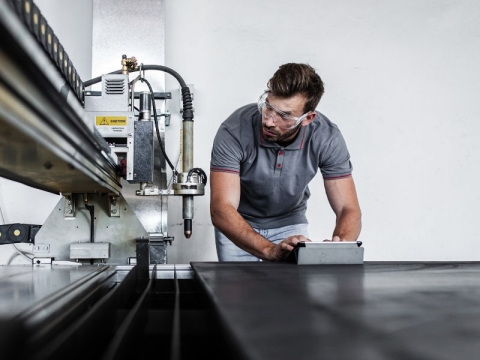
Bagi toko-toko di Eropa, solusi terbaik untuk mengatasi kenaikan tarif per jam adalah dengan menguasai jam kerja mesin. pemotong laser lembaran logam Dibeli dengan harga pabrikan Tiongkok memiliki biaya internal sekitar... $12 untuk $24 per jam di Eropa, termasuk listrik, gas, dan bahan habis pakai, dibandingkan dengan tarif outsourcing sebesar $110 untuk $200.
Perhitungan pengembalian modalnya sangat jelas: sebuah toko yang melakukan outsourcing 60 jam pemotongan per bulan $1menghabiskan sekitar 30 per jam $7Rp 800 per bulan, cukup untuk membiayai sebagian besar mobil kelas pemula dan menengah. mesin pemotongan laser serat sambil tetap menjaga waktu tunggu dalam minggu yang sama. Dealer di Inggris sekarang menetapkan titik kritis serendah £1,500 untuk pemotongan yang dialihdayakan per bulan.
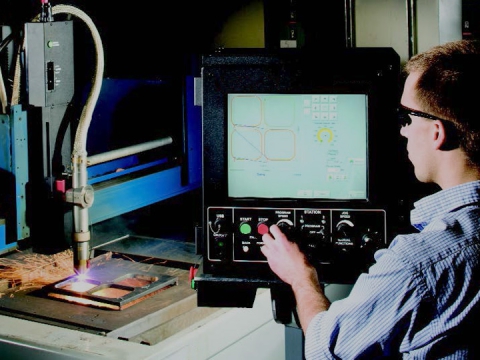
Toko-toko yang sebagian besar memotong baja lunak tebal dapat melakukan lindung nilai dengan biaya lebih rendah: a Mesin pemotong plasma CNC untuk lembaran logam mampu menangani pelat tebal dengan biaya yang jauh lebih rendah daripada laser serat optik, dan uraian kami tentang berapa harga meja pemotong plasma menunjukkan di mana garis anggaran itu berada.
Pertanyaan yang Diajukan Pembeli Sejati
Ungkapan-ungkapan ini terus muncul di forum-forum fabrikasi dan kolom pencarian, dan masing-masing merujuk pada bagian di atasnya.
• "Mengapa harga fabrikasi Prancis saya tiga kali lipat dari harga fabrikasi Cina?"
• "Berapa sebenarnya biaya pemotongan laser per jam di Eropa?"
• "Apakah China masih lebih murah setelah dikurangi bea masuk?"
• "Berapa biaya tambahan listrik untuk satu jam pemotongan laser?"
• "Pada titik mana membeli laser sendiri lebih unggul daripada menggunakan jasa pihak luar?"
Kesalahan Umum Saat Membandingkan Penawaran Harga
• Membandingkan harga barang buatan Tiongkok (ex works) dengan harga barang buatan Eropa (delivered).
• Memperlakukan kesenjangan tenaga kerja sebagai keseluruhan cerita sambil mengabaikan energi, gas, dan biaya sosial.
• Mengunci kontrak beli (long contract) pada satu skenario nilai tukar tunggal.
• Dengan asumsi harga di wilayah pesisir Tiongkok berlaku di setiap wilayah dan pemasok.
• Membandingkan tarif per jam mesin kosong dengan tarif bengkel yang beroperasi penuh.
• Tidak memasukkan pengerjaan ulang, kunjungan inspeksi, dan barang rusak ke dalam biaya akhir.
• Menentukan ukuran mesin internal berdasarkan volume saat ini tanpa ruang pertumbuhan di masa depan.
Daftar Periksa Perbandingan Biaya
✔ Konversikan setiap penawaran harga menjadi biaya akhir per bagian, termasuk ongkos kirim, bea masuk, pengemasan, dan ketentuan pembayaran.
✔ Tanyakan kepada setiap bengkel mengenai tarif per jam mesin dan tarif per bengkel yang sedang beroperasi sebagai angka terpisah.
✔ Mintalah informasi mengenai biaya tambahan energi; banyak toko di Eropa sekarang merinci biaya listrik.
✔ Buat model kontrak berdasarkan setidaknya 2 skenario nilai tukar.
✔ Berikan harga yang jujur untuk opsi pengoperasian di tempat: pembayaran mesin, listrik, gas, bahan habis pakai, dan satu jam kerja operator.
✔ Berikan nilai pada waktu tunggu: berminggu-minggu di laut dibandingkan dengan pemotongan di tempat dalam minggu yang sama.
✔ Mintalah sertifikat material dan ketelusuran di setiap pasar sebelum membandingkan harga.
Pertanyaan yang Sering Diajukan
Berapa sebenarnya biaya per jam yang dikenakan toko untuk pemotongan laser?
Tarif sebenarnya sangat bervariasi tergantung volume dan usia mesin. Dalam sebuah diskusi di Practical Machinist tentang penetapan harga laser, sebuah bengkel dengan volume rendah menagih $200 per jam pada model yang lebih lama CO2 sementara anggota yang menggunakan peralatan fiber modern menggambarkan pasar yang jauh lebih kompetitif di mana biaya operasional yang tinggi menghukum peralatan yang sudah ketinggalan zaman. Sebagian besar kutipan dari Barat berada di antara $100 dan $200.
Mengapa harga produk fabrikasi dari Tiongkok jauh lebih rendah?
Biaya tenaga kerja, biaya operasional, dan kedekatan material saling berkaitan. Dalam sebuah diskusi di Practical Machinist baru-baru ini, sebuah bengkel milik satu orang di wilayah Barat mengutip pernyataan berikut. $40 per bagian dan menyaksikan sebuah pabrik di Tiongkok mengirimkan suku cadang yang sama dengan harga... $250 per unit, termasuk anodisasi. Jam kerja teknik yang murah dan pasokan baja dan aluminium untuk pintu pabrik memperdalam kesenjangan jauh melampaui upah.
Berapa tarif per jam yang dilaporkan oleh bengkel CNC dan fabrikasi umum?
Dalam diskusi tarif Practical Machinist, bengkel-bengkel melaporkan kira-kira $60 per jam untuk mesin manual, $100 untuk mesin penggiling dan bubut CNC, dan $1Usia 20 tahun ke atas untuk penggunaan waterjet dan laser, dengan tarif regional yang berlaku antara... $75 dan $125. Harga untuk pekerjaan yang kompleks, dengan toleransi ketat, atau pekerjaan mendesak akan melebihi batas yang ditetapkan di mana pun.
Apa yang mengejutkan para pembeli yang mengimpor mesin langsung dari China?
Proses bea cukai dan menunggu. Di forum LightBurn Software, seorang pembeli yang mempertimbangkan pembelian laser fiber langsung menemukan mesin tersebut jauh lebih murah bahkan setelah $8Biaya pengiriman 00, tetapi harus memperhitungkan biaya bea cukai, perantara, dan berbulan-bulan di laut dibandingkan dengan pengiriman minggu depan dari gudang domestik. Anggaran mencakup bea masuk dan waktu, bukan hanya harga stiker.
Apakah membeli mesin langsung dari China berisiko bagi dukungan teknis?
Ini adalah pertimbangan yang dipikirkan pemilik secara terbuka. Dalam sebuah diskusi impor di Garage Journal, seorang pembeli membayar sekitar... $3,200 dikirim untuk mesin yang sesuai dengan $13,000 setara domestik, menggunakan platform escrow untuk perlindungan, sementara anggota berpengalaman mencatat bahwa reseller domestik mendapatkan premi mereka melalui dukungan perangkat keras, perangkat lunak, dan bantuan telepon. Merek komponen dan ketentuan layanan menentukan risikonya.
Kapan mesin internal mengalahkan outsourcing ke China?
Ketika kecepatan, pekerjaan sesuai pesanan, dan akuntabilitas lebih penting daripada harga komoditas. Para anggota Practical Machinist yang mendiskusikan harga dari Tiongkok menyimpulkan bahwa bersaing langsung untuk suku cadang sederhana dalam jumlah besar adalah permainan yang merugikan, sementara kapasitas internal unggul dalam hal waktu pengerjaan yang cepat, iterasi desain, perlindungan tanggung jawab, dan material bersertifikat yang jarang dapat ditandingi oleh penawaran dari luar negeri.
Dapatkan Perkiraan Pengembalian Modal untuk Pemotongan Internal
Kenaikan tarif toko di Eropa adalah masalah matematika, dan memiliki mesin tersebut mengubah persamaannya. STYLECNC Telah memproduksi mesin laser serat optik dan CNC sejak tahun 2003, mendukung para fabrikator di lebih dari 180 negara dengan dukungan teknis seumur hidup dan pelatihan operator.
Kirimkan data volume pemotongan bulanan, jenis material, dan ketebalan kepada teknisi kami untuk mendapatkan perkiraan pengembalian investasi secara gratis. Hubungi kami atau WhatsApp +86-187-6614-8818, email info@stylecnc.comatau kunjungi www.stylecncKunjungi .com untuk meminta penawaran yang disesuaikan.